


At the 70th annual Commission on the Status of Women, global leaders gathered to discuss one of the most urgent issues facing women and girls today: access to justice.
Far too often, the people most in need of reliable justice systems are the least represented in conversations about how they should work — especially adolescent girls.
Through our virtual parallel event Girls’ Roadmaps to Justice: A Global Girl-Led Showcase on Barrier-Free Access to Safety & Support — made possible by our special consultative status with the UN’s Economic and Social Council (ECOSOC) — we set out to change that.
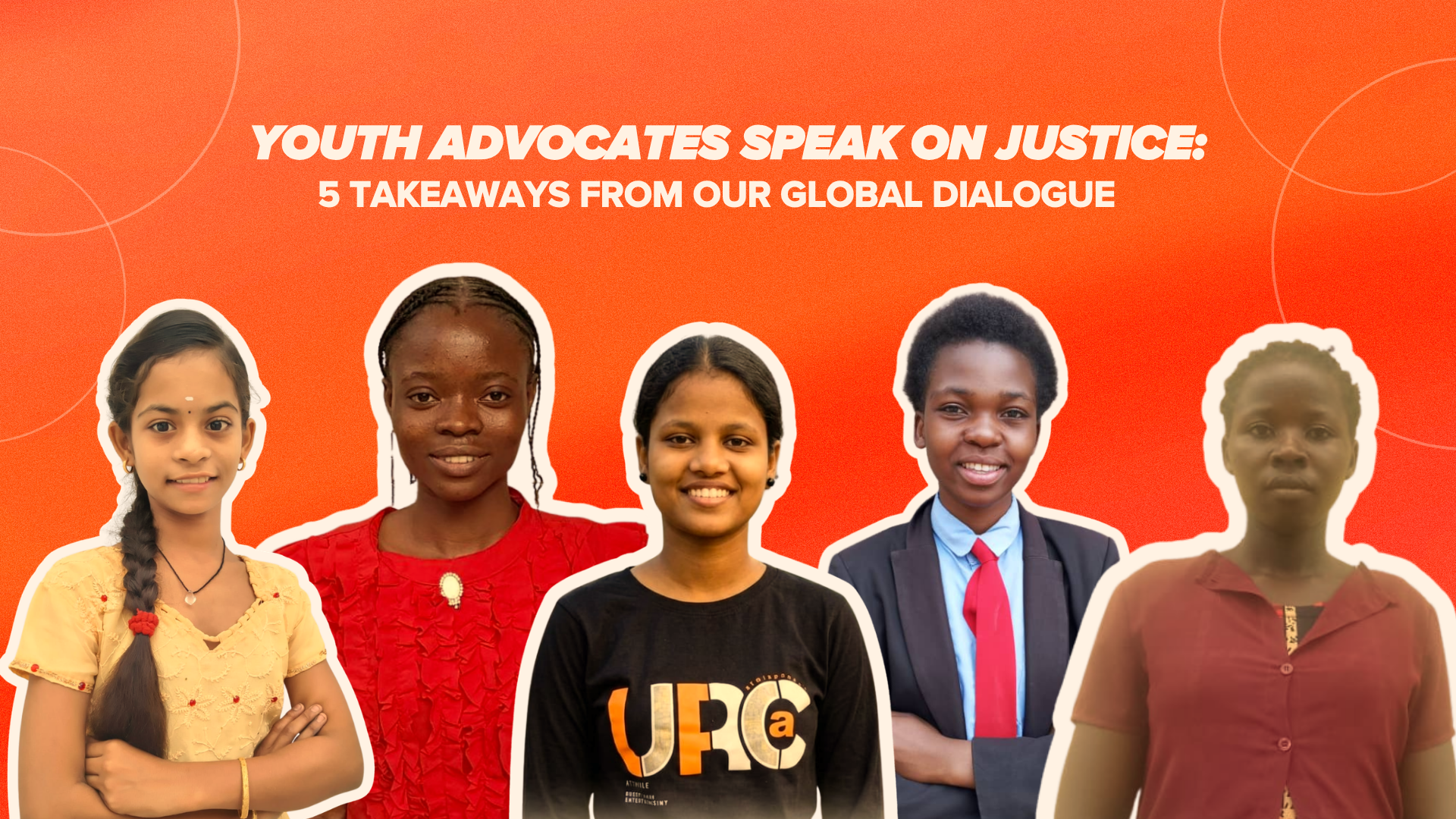
Girls from multiple countries took the virtual stage to share the realities they encounter when trying to find safety, protection, and support in their communities. They highlighted challenges such as gender-based violence, early and forced marriage, and harassment: issues that shape the daily lives of girls around the world.
Drawing on both personal perspectives and shared collective experiences, these youth advocates spoke out to demand systemic change and a future where girls can safely access reporting systems and be met with action and accountability.
The message they shared was clear: Justice systems cannot work for girls without girls.
Here are five key takeaways from the powerful insights they shared.
1. Poverty and conflict significantly increase girls’ vulnerability to exploitation and abuse.
Alima, speaking from South Sudan, described how sexual exploitation often emerges from a combination of structural pressures — poverty, prolonged conflict, and deeply rooted gender inequality. In communities where families struggle to meet basic needs, some girls face pressure to exchange sex for food, money, or protection.
As Alima explained:
“South Sudan has experienced many years of conflict. During these difficult times, girls and women become more vulnerable. Some powerful people or armed groups may take advantage of them. Girls who live in displacement camps are often at higher risk of violence.”
Her message underscored how conflict and poverty compound girls’ vulnerability and heighten the risk of exploitation.
When communities are destabilized by violence, displacement, and economic hardship, protective systems often break down, leaving girls with fewer safeguards and fewer choices. In these conditions, addressing abuse requires more than accountability alone. It demands stronger protection systems, access to basic services, and safe, confidential pathways for girls to seek help.
2. A culture of silence and shame keeps many girls from completing their education.
Chandini, from Sangidi village in India, shared how girls in her community lack safe and secure pathways to attend school and complete their education. Crowded buses and long walks without adult supervision expose girls to harassment, turning what should be a routine journey into a daily challenge to their mental and physical health.
Far too often, this harassment completely derails a girl’s future.
As Chandini explained:
“Many girls face harassment while going to school. When this happens, she tells her parents. Parents often say, ‘If others know this, our family respect will go,’ or ‘Stay away from them. Walk quietly.’ But they do not go to the police. They think people will blame the girl, and they fear it will affect her future marriage. When this problem continues, parents decide to stop the girl’s education. When a girl stops studying, she may be married before 18 years.”
Chandini called for safe transportation, awareness of laws and rights, friendly police response, accessible helplines, and strict action against harassment and child marriage to ensure that girls can pursue education with dignity and confidence.
3. Social pressure can push families to marry girls early.
Christiana, speaking from an Internally Displaced Person (IDP) Camp in Nigeria, shared how cultural traditions and societal expectations often force early marriage upon girls in her community — even if their parents may desire different futures for them.
As Christiana explained:
“Families sometimes face strong pressure from relatives, religious expectations, and community traditions to marry their daughters early. Even families who may not want to arrange early marriages can feel forced to do so because of what others might say. People may ask why a girl is not yet married at 16 or 20, suggesting that she is becoming ‘too old,’ or that no one will want to marry her later. To avoid criticism or judgment, families may agree to early marriage even when they know it may not be the best choice for their daughter.”
Christiana also highlighted the serious consequences of these pressures. When girls are married young, they are often expected to begin having children before their bodies are fully developed, putting them at risk of dangerous pregnancy and childbirth complications.
She called for stronger education and awareness for families, consistent enforcement of laws against child marriage, and greater community support for girls’ education so girls can stay in school, protect their health, and pursue brighter futures. For Christiana, empowering girls with knowledge of their rights is central to changing this reality.
“Girls should have the opportunity to seek help and learn about their rights,” she said. “When girls understand their rights, their voices, and their potential, they are more likely to stand up against early marriage and advocate for their own futures.”
4. When girls report abuse, their claims are too often dismissed or ignored, limiting access to justice.
Rani, from Sikharchandi Nagar in India, shared how in her community, poverty forces many girls into child labor, which exposes them to abuse and cruelty. When they try to seek help, friends and family often don’t take their concerns seriously, leaving them feeling isolated and unprotected.
As Rani explained:
“Right now, when a girl faces abuse, she usually goes first to her friends or family for help. However, in many cases, people do not take the issue seriously. They may say that everything will be fine soon or ignore the situation. Because of this, girls often feel that nobody is responding or listening to them, and they are left alone with their problems.”
Rani called for collective commitment from families and leaders to uphold girls’ dignity and safety. Her final statement: “Girls should never feel alone when they speak about abuse. They should feel heard, supported, and protected.”
5. Girls need safe spaces like GLOW Club to identify and speak out against abuse.
Drasila, from Zambia, shared how girls in her community are held back from determining their own futures due to deeply-entrenched gender norms. These societal barriers make it nearly impossible for girls to complete their education or exercise their agency, leaving them vulnerable to harmful practices like forced childhood marriage.
As Drasila explained:
“When families are poor, they think marrying a girl will help. When girls do not know their rights, they cannot speak up. When there is no safe space, girls stay silent.”
She shared that while many girls in her community have their futures written out for them from the day they are born, there is a way to change the ending: Providing girls with safe spaces and supportive networks to learn about their rights and how to advocate for themselves. She ended her remarks with one powerful call to action:
“We must give girls a choice.”
Together, these powerful voices remind us that justice systems must do more than exist — they must be accessible, responsive, and designed with girls in mind. When girls are given the space to speak about the barriers they face, they also point us toward the solutions.
To hear the advocates’ stories, insights, and calls to action in their own words, watch the full recording of the conversation here.
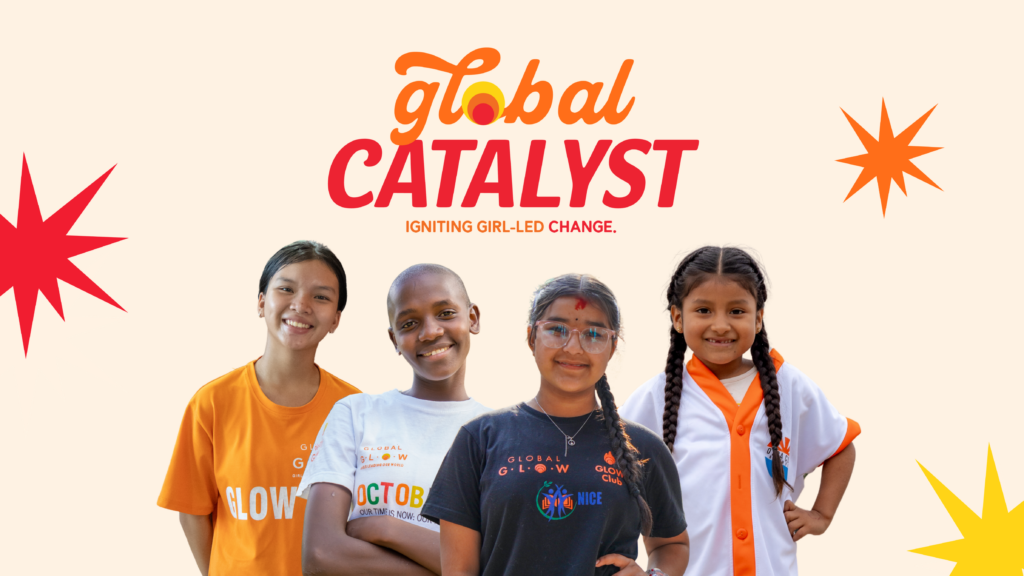
Global Catalyst mentors girls around the world to become powerful advocates and confident leaders. Our signature program, GLOW Club, connects girls in some of the world’s most underserved areas with trusted local mentors and a safe space to express themselves as they develop their agency, find their voice, and build their power. Since our founding, we’ve ignited the power of more than 100,000 girls, sparking a growing movement of youth-led change that is transforming communities — and the world — for the better.