



6 Fun, Meaningful SEL Activities to Help Girls Develop Confidence and Advocacy Skills

June 25, 2026
Social and Emotional Learning (SEL) is one of the most effective ways for girls to learn how to understand themselves, build healthy relationships, manage stress, and navigate challenges.
This type of learning isn’t just reserved for the classroom. It can happen anywhere, and be guided by someone like you. Leading fun, meaningful SEL activities with a daughter, niece, student, younger sibling, or any other young woman in your life is a powerful way to help girls develop confidence, strengthen their emotional intelligence, and start believing in the power of their voice — skills that are more important today than ever before.
According to a 2021 study from the Centers for Disease Control and Prevention, nearly 3 in 5 teen girls in the United States reported feeling persistently sad or hopeless — a statistic that was double that of boys. It was also the highest level reported over the past decade.
Teen girls today are overwhelmingly feeling isolated from friends and community, hopeless about the state of the future, unheard by adults and institutions, and pressured to live up to unrealistic beauty standards.
Social and Emotional Learning is a powerful tool that can help girls navigate these challenges and grow into confident, self-assured leaders.
What Is Social and Emotional Learning (SEL)?
Social and Emotional Learning helps young people (and even adults) learn and practice skills that set them up for success in all aspects of life: whether that be learning to effectively manage their emotions, communicate with others, build and maintain healthy relationships, and develop a healthy sense of self.
This type of learning is generally structured around the development of five core competencies:
- Self-Awareness: Understanding your emotions and how they influence your behavior
- Self-Management: Learning how to regulate your emotions to achieve your goals; for example, learning how to manage stress or practice self-discipline
- Responsible Decision-Making: Making caring, constructive choices for your own wellbeing and the good of your community
- Social Awareness: Being able to understand and empathize with others
- Relationship Skills: Developing healthy, supportive relationships through skills like empathy, teamwork, cultural competency, and collaborative problem-solving.
SEL has measurable benefits. It’s been proven to help young people around the world develop positive behaviors, improve academic outcomes, and develop self-esteem.
Why Do Girls Need Social and Emotional Learning (SEL)?
While SEL benefits everyone, it can be especially important for girls as they navigate unique social, emotional, and developmental experiences. From a young age, girls often face pressures related to identity, confidence, relationships, achievement, and expectations from the world around them.
At Global Girls Glow, we bring a proven SEL-based curriculum to girls in underserved communities across more than 30 countries through our signature program, GLOW Club. Since our founding in 2012, our programs have ignited the power of over 100,000 girls to overcome extraordinary barriers, challenge harmful norms, purse their educations, and find and use their voice to advocate for change — both for themselves and their communities.
In Andhra Pradesh, India, after just one year of our programming, girls reported a 36% increase in responsible decision-making skills, and a 21% increase in SEL skills overall.
Fun, Meaningful SEL Activities to Lead With Girls In Your Life
You don’t need to be an educator, or organization, to help foster these important skills. Whether you’re a parent, mentor, teacher, aunt, older sibling, or trusted adult, leading simple, intentional SEL activities can create meaningful opportunities for the girls in your life to grow into powerful advocates and confident leaders.
Below, you’ll find some fun, meaningful SEL activities — pulled directly from our proven GLOW Club curriculum — that can spark conversations, deepen connections, and help girls understand more about who they are and the impact they want to make on the world around them.
-
The Name Poem
Through this activity, girls are introduced to the idea of loving themselves and appreciating their own unique qualities. It is important to think about our relationships with ourselves before we think about our relationships with others!
Start by reading and discussing the following poem:
Special Child
By: Jacqueline Drye
I am a special child.
I am a good and wonderful child.
When I laugh, I make people happy.
When I smile, I light up a room.
I am smart and can do many things.
One day, I’ll show the world
How great I am!
Then, grab a piece of paper and have your young changemaker write “I AM” at the top, followed by their name going vertically down the page.
Next, you’ll work together to come up with positive affirmations about themselves that start with each letter of their name. This is a simple yet beautiful way for girls to start attaching positive statements to their name and identity. You can also get creative and have them decorate their poem with stickers, colors, and drawings that show how they live out these qualities in their life!
2. Principle Petals
This activity is one of our GLOW Club favorites! It helps girls reflect on what their personal values are, and the moments, relationships, or experiences that helped them develop their core values.
First, hold a short discussion about values and principles. Make a list of what someone’s values may be — for example, honesty, compassion, and selflessness — and explain the differences between the two concepts:
- Values: Internal beliefs about what is most important to you. Why you care.
- Principles: Practicing your values in the real world and in your interactions with others. How you behave.
Now, for the art! You’ll guide your young changemaker through making and labeling a flower that displays their values and principles. The larger petals will have the names of their values, while the smaller petals growing out of them will name principles that grow out of that value.
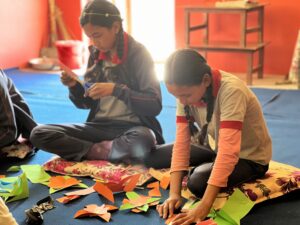
GLOW Club members in Nepal create Principle Petals.
This activity can be drawn on a piece of paper, or made more tactile using construction paper, scissors, and glue. It’s a beautiful visual reminder that allows for great discussions about how we live out our values each day, and how that is a beautiful thing (like a flower!).
3. “My Why” Vision Boards
This activity helps girls think deeply about what they’re interested in advocating for and why it’s important to them. Their “why” is what drives them to act and make positive change, both in their personal lives and in their communities.
Start by asking your changemaker to make two columns on a piece of paper. In the left-hand column, they’ll make a big list of their passions and interests. These can be topics they want to learn more about, or issues they’re motivated to change. For example, girls playing sports, climate change, body image, or helping animals.
Next, on the right column, they’ll write their “whys,” which are why these topics are important to them. Some questions that may help them think deeply about this are, Why is this topic important for society? Or, How is this issue related to your values?
After giving ample brainstorm time and discussing all of their ideas, ask them to pick the topic they are most passionate about. This is what they will use to make their vision board!
Explain that vision boards are visual representations of something we want to see in the future. It can be a vision for ourselves, or a vision for our community and world. Using paper, scissors, markers, glue, magazines, and newspapers, they will choose one of their passions and the “why” that goes with it, and create a vision board that visually represents how they hope to engage in this topic or advocacy in the future.
Some guiding questions can be:
- How can you and others advocate for the importance of your passion?
- What does that advocacy look like?
- Once you’ve picked your top interest, how can you be a leader in that field?
By the end of the activity, your changemaker will have an empowering poster they can look to for inspiration and encouragement, with practical ideas for how they can turn their “why” into real-world action.
4. “Finding My Boundaries” Self-Portrait
This is an introspective activity where girls can look within, at the emotions they might feel while in uncomfortable, vulnerable, or confusing situations. This activity will help the changemaker in your life identify their boundaries and the feelings that come along when someone or something crosses them.
Start by reading and discussing the following poem:
“it was when i stopped searching for home within others
and lifted the foundations of home within myself
i found there were no roots more intimate
than those between a mind and body
that have decided to be whole”
– Rupi Kaur
Next, lead a conversation about personal boundaries, the emotions and feelings we may get when those boundaries are crossed, and, how understanding our boundaries relates to advocacy.
Explain that boundaries, in a general sense, are man-made or natural structures that stop one thing from interacting with another. Personal or emotional boundaries can be made for the same reason. Your personal boundaries let other people know what is safe and reasonable to do with you, near you, or to you. Like traditional boundaries, personal boundaries stop someone from interacting with you in a certain way.
Explain that someone can cross your personal boundaries whether they are aware of what your boundary is or not. For example, someone may not know that you prefer to give out high-fives, instead of hugs, and they might hug you unexpectedly. They have crossed your boundary.
Next, lead your changemaker through a “Finding My Boundaries” art activity. Have them draw a silhouette of their body from head to toe, then add artistic representations of their boundaries and the physical sensations they experience when those boundaries are crossed. For example, they might draw a spiky outline around their body to show they do not like unexpected hugs, or add swirling lines near their stomach to represent feeling nervous when someone stands too close.
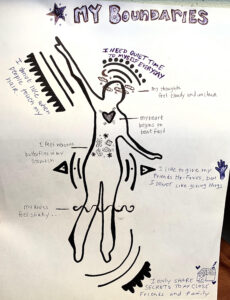
Encourage creativity, allow plenty of time for reflection and discussion, and remind them there are no right or wrong answers.
This activity helps girls recognize their personal boundaries, identify the physical cues that signal when those boundaries have been crossed, and build the confidence to advocate for themselves in a respectful and healthy way.
5. The Relation-Ship
This activity is great for helping the girls in your life think through the qualities of healthy and unhealthy relationships. To illustrate this, you will use the metaphor of a ship sailing on rough water: a Relation-Ship!
Explain that healthy relationships are built on positive qualities, while unhealthy relationships include behaviors that can damage trust, respect, and connection. Have them fill in the ship with qualities of a good relationship; for example, trust, care, and communication.
Next, they will think about the signs of an unhealthy relationship, and label and visually represent them on their drawing. For example, jealousy may be a sea monster, and disrespect or lying may be a storm, or rough waters threatening to throw the ship off course.
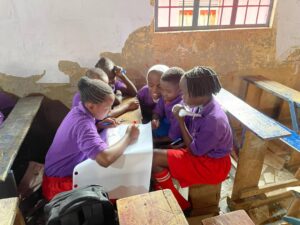
GLOW Club members in Uganda work on relation-ships.
After reviewing their art project, have a discussion about their top three “must-haves” in a healthy relationship, and three “deal-breakers” that might ruin a relationship beyond repair. Finish with a conversation about why recognizing both healthy and unhealthy relationship qualities is important, and how these ideas can help set boundaries and make safe, respectful choices.
6. The Two Sides Of Me
This powerful activity that can help girls critically analyze the limitations and expectations others may place on them, and begin to understand how they can overcome these barriers to become their full, authentic selves.
Begin by discussing the expectations that families, communities, and society can sometimes place on girls. Explain that while cultures may have different ideas about how girls should act, dress, or behave, every girl has the right to decide who she wants to be.
Ask questions such as, “What messages do girls hear about how they should act?” and “If no one expected anything from you, what would you be like?” Encourage open conversation without judging or correcting their answers.
Next, using paper, scissors, and pens and markers, have your young changemaker create and cut out a paper mask. On one side of the mask, they’ll write words or drawings that represent the social norms and expectations put on them by their communities. On the other side, they’ll fill in words and drawings representing who they feel they really are and how they would like to act, or what they would like to achieve, without any added pressures.
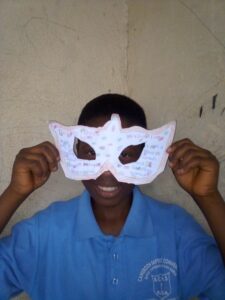
A GLOW Club member in Cameroon shares her “Two Sides Of Me” mask
To finish, have a discussion about the similarities and differences between the two sides of the mask, and what they learned about themselves. This activity is an excellent way to teach that while outside expectations may influence us, everyone deserves the freedom to express their authentic selves and pursue their greatest ambitions.
Want more SEL tips to support the girls in your life? Check out our list of 10 Ways Fathers Can Raise Confident Girls Who Believe in Themselves.
Global Girls Glow mentors girls around the world to become powerful advocates and confident leaders. Through our signature program, GLOW Club, we create safe, supportive spaces for girls in some of the world’s most underserved areas to connect with trusted mentors, develop the confidence to lead, and begin dreaming without limits. Since our founding, we’ve ignited the power of more than 100,000 girls — and we’re just getting started.