



How Many States Have a Period Tax? The Hidden Cost of Menstrual Products in the U.S.

May 11, 2026
When we talk about menstrual inequity, it’s easy to picture it as a problem happening somewhere else — in rural communities without solid infrastructure, in schools without running water, in countries where girls miss class because they can’t access a pad or tampon.
While period poverty is absolutely a global crisis, there’s a version of this story unfolding right here in the United States that rarely gets the same urgency or outrage.
It’s called a period tax — or tampon tax — and it affects millions of menstruators every single day.
What is a Period Tax?
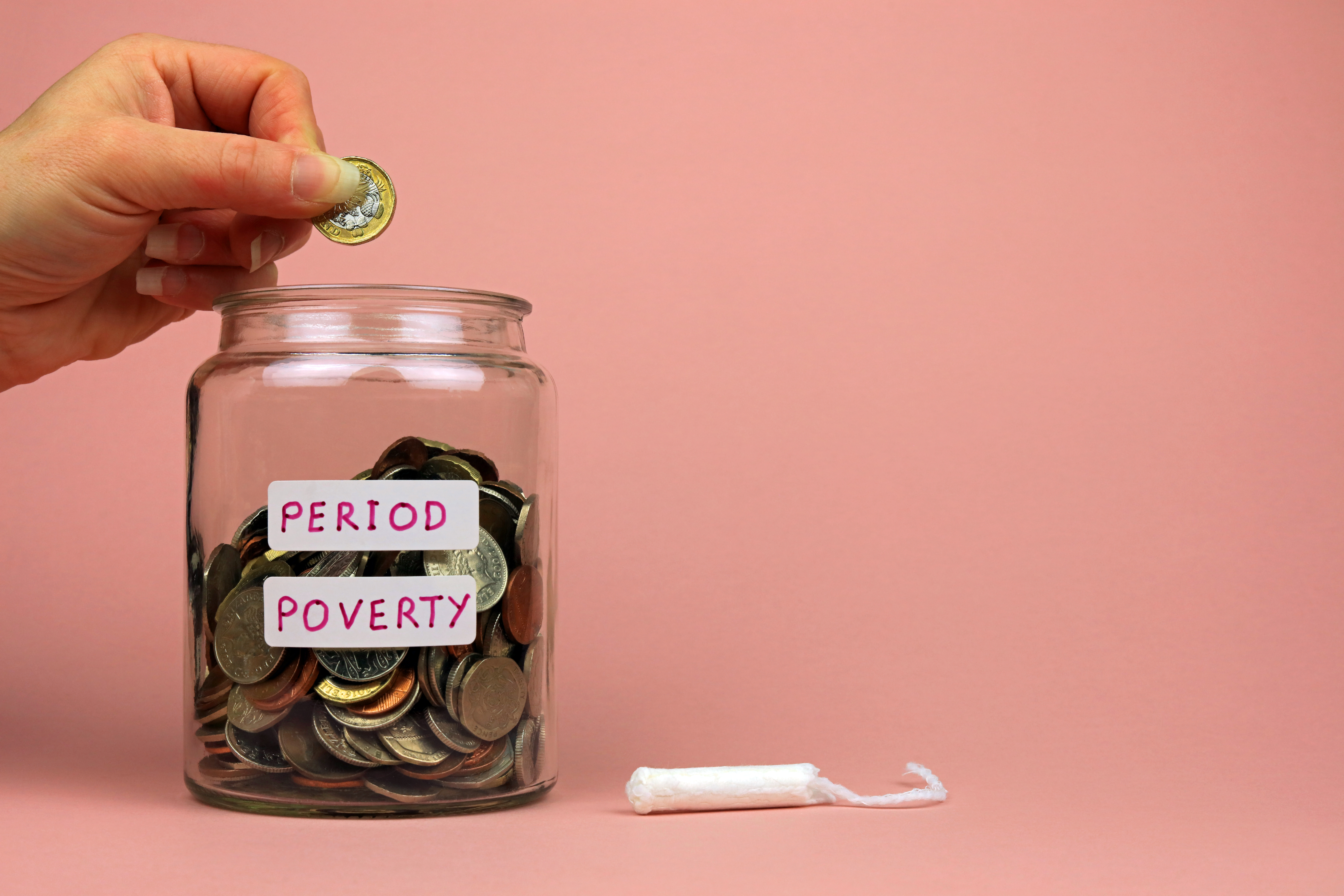
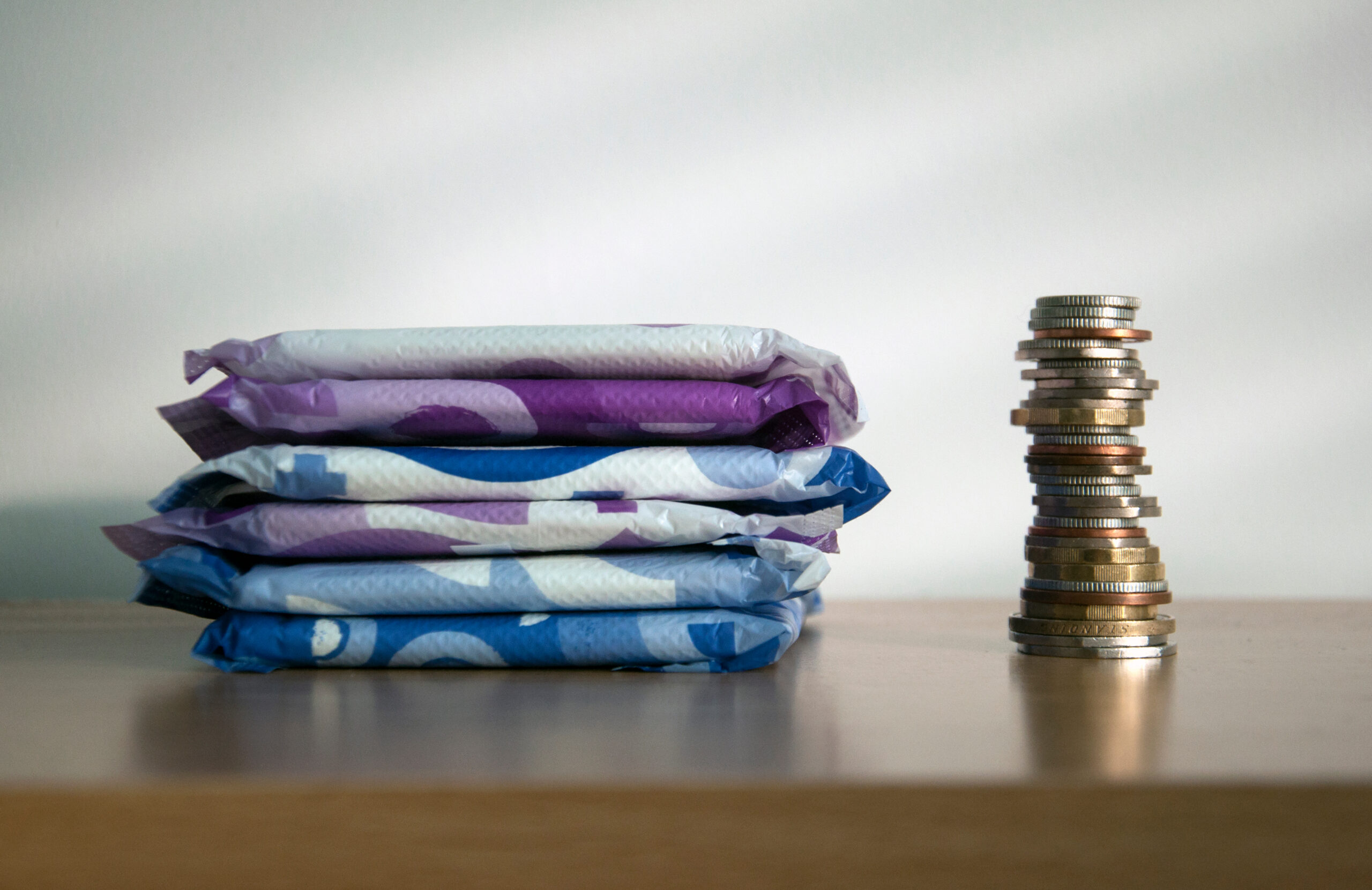
A period tax refers to the sales tax that state, county, or city governments collect on the retail purchase of menstrual products. Too often, period products are taxed as luxury items rather than basic necessities, at a similar rate to items like electronics, makeup, and toys.
Compare that to how most states treat other essentials: 40 states (and Washington D.C.) exempt food from their general sales tax because it’s a basic necessity. Most states also exempt prescription medications. Yet in nearly a third of the country, the products that menstruators need to manage their periods are still legally classified as luxuries.
That means that in some states, candy and soda qualify as tax-exempt groceries — but a box of tampons does not.
And what if we look at the global context? Since Kenya became the first country to scrap the tax on menstrual products in 2004, at least 17 countries have followed suit — including Mexico, Britain, and Namibia — and another 17 countries in Europe have reduced their VAT on sanitary products.
In 2022, Scotland became the first nation in the world to make tampons and sanitary pads free and available at designated public places.
Menstrual equity is slowly advancing worldwide — and the United States has no excuse not to follow suit.
How Many States Still Have a Period Tax?
Currently, 18 American states still have a period tax, with rates ranging from 4% to 7% (the highest being in Indiana, Mississippi, and Tennessee). This list includes:
- Arizona
- Arkansas
- Georgia
- Hawaii
- Idaho
- Indiana
- Kansas
- Kentucky
- Mississippi
- North Carolina
- North Dakota
- Oklahoma
- South Dakota
- Tennessee
- Utah
- West Virginia
- Wisconsin
- Wyoming
While several other states have recently passed legislation eliminating their tax on menstrual products, millions of girls and women across the states above are still required to pay a sales tax on tampons, pads, and other period products.
For them, buying a tampon means paying a tax on a biological necessity — not a luxury or optional purchase, but a basic health need that roughly half the population relies on for decades of their lives.
The Cost for Women and Girls
The period tax has a devastating effect on menstruators and their futures. 1 in 4 students in the U.S. have struggled to afford period products. Additionally, 1 in 3 report missing class due to lack of access to menstrual products, with 39% of teens saying they have felt unable to do their best schoolwork because of it.
The cost is even heavier for women in girls in marginalized communities. In 31 states, people who are incarcerated must still purchase menstrual products from the commissary, placing a significant financial burden on some of the most vulnerable people in the country.
64% of low-income women were unable to afford period products at least once in the previous year, and 68% of women experiencing period poverty showed symptoms consistent with depression.
These aren’t statistics from a country without infrastructure to meet these needs — they’re from American classrooms, in every region, including in the states that have already moved to eliminate the tax.
Why Girls’ Voices Are Crucial in Ending the Period Tax
In GLOW Clubs around the U.S., girls are finding their voice and learning to speak up about menstruation and menstrual stigma — within their clubs, in their communities, and on global platforms.
Nuri, a GLOW Club alumna from Detroit, recently facilitated a global dialogue on menstrual equity with girls from around the world. She shared her perspective on how lack of access to sanitary products impact girls’ health and well-being.
“Menstruation significantly impacts girls’ mental health due to societal stigma,” Nuri said. “Emotional distress, mood swings, and feelings of shame are common experiences.”
At Global Girls Glow, we’re committed to supporting girls like Nuri in their advocacy so they can create the change they want to see in the world — changes like ending the shame and stigma associated with menstruation. In communities around the world, we see firsthand how menstrual stigma can impact a girl’s confidence, education, and ability to stay in school.
Global Girls Glow supports girls around the world is speaking out against menstrual shame and stigma.
Stigma, like a tax, is its own kind of barrier to a girl’s potential. That’s why we’re committed to smashing the period taboo and champioing a world where menstruation is never a source of shame or limitation. Because every girl deserves the opportunity to lead, thrive, and shape the future she is capable of creating.
A Future Free From The Period Tax is Possible
The state of the period tax in America isn’t completely dire. Ever since Minnesota became the first state to eliminate the period tax in 1981, the movement has gained meaningful momentum. Just last year, Alabama began exempting menstrual products from their sales tax on a temporary basis (up until 2028), and Missouri eliminated its tax entirely.
This was only possible because menstruators and advocates — in particular, adolescent girls — made enough noise that lawmakers couldn’t look away.
That same energy is what will end the period tax in the remaining 18 states.
It’s time to stop treating girls’ health as a footnote and start treating it as the foundation of their success. When we listen to girls, they tell us exactly what they need to succeed: dignity, access, and equity.
Ending the period tax goes far beyond money. It is a statement to girls and women that we value their health, their needs, and their futures.
Join us in creating a world where girls are heard, and their basic needs are treated as exactly what they are: essential.
Because a pad is not a luxury. And any law that says otherwise must change.
Want to learn more about the state of menstrual equity worldwide? Check out our list of 7 eye-Popping Period Poverty Statistics Everyone Should Know.
Global Girls Glow mentors girls around the world to become powerful advocates and confident leaders. Through our signature program, GLOW Club, we create safe, supportive spaces for girls in some of the world’s most underserved areas to connect with trusted mentors, develop the confidence to lead, and begin dreaming without limits. Since our founding, we’ve ignited the power of more than 100,000 girls — and we’re just getting started.