
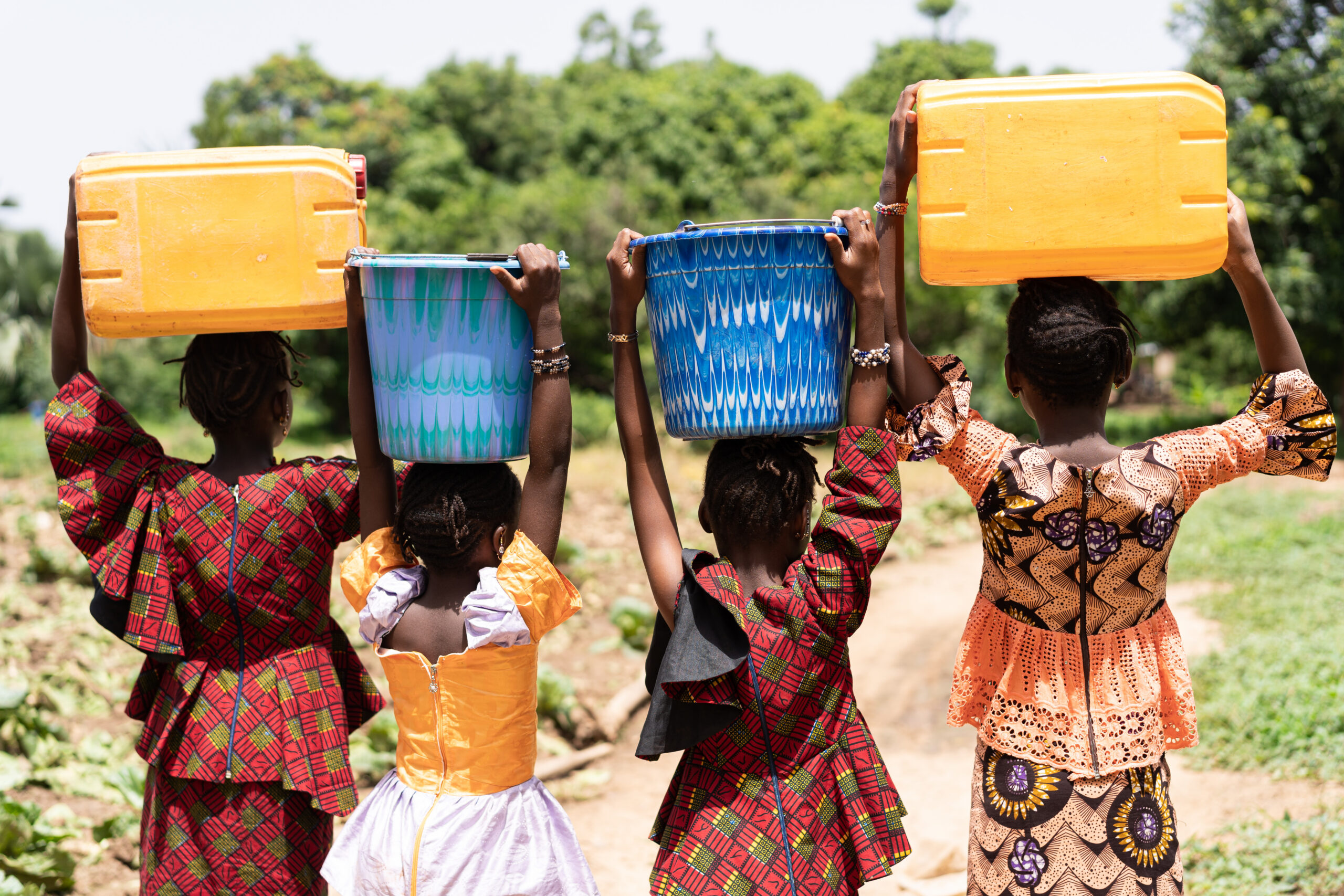


Consider a 13-year-old girl. Call her Amara, though she has thousands of names, and she lives on every continent.
She woke up this morning to find that her period had started, soaking through the only school uniform her family can afford. There are no sanitary pads in the house. There is one toilet at her school, and it has no door. Her biology class has never mentioned the word menstruation.
Amara has a decision to make. She can go to school and face the day in soiled clothing. Or she can stay home.
She stays home.
She will stay home for several days this month, as she does every month. Over the course of a school year, she will miss roughly one week of school out of every five. Eventually, she will have fallen so far behind that she will give up on her education altogether.
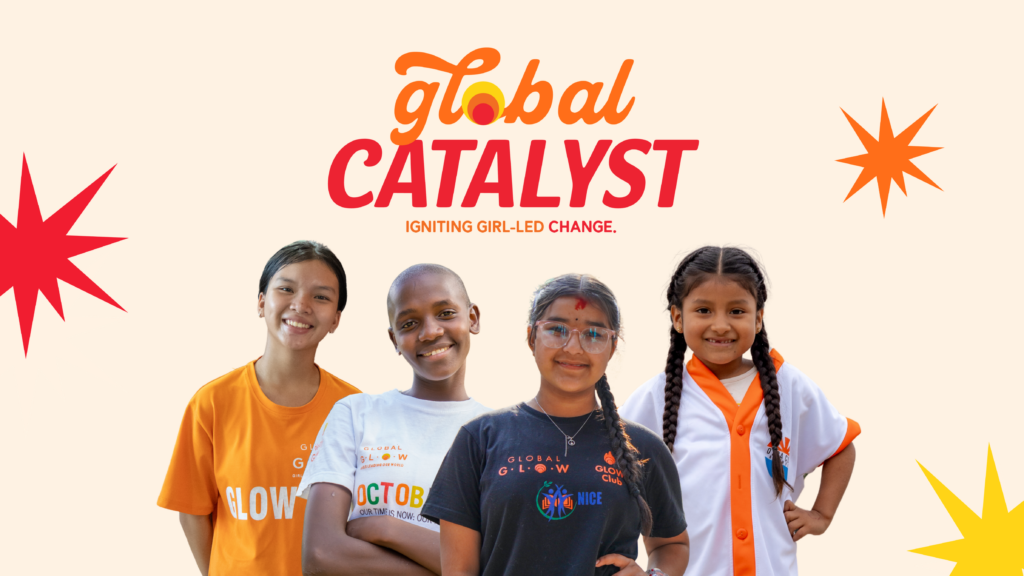
I have spent 15 years working with girls like Amara. As the founder of Global Catalyst, I’ve sat with girls who have described managing their periods with leaves, strips of foam torn from old mattresses, and cloth that could not be properly cleaned.
I have listened to them speak about the shame of it all: the fear of being seen, the silence enforced by adults, and the sense that their bodies were something to hide rather than care for with dignity.
I have known too many girls who simply stopped coming to school. Not because they dropped out. But because they were pushed out.
The international community still hesitates to call this what it is: a form of violence against girls. Today, in honor of Menstrual Hygiene Day, I’m demanding that this change.
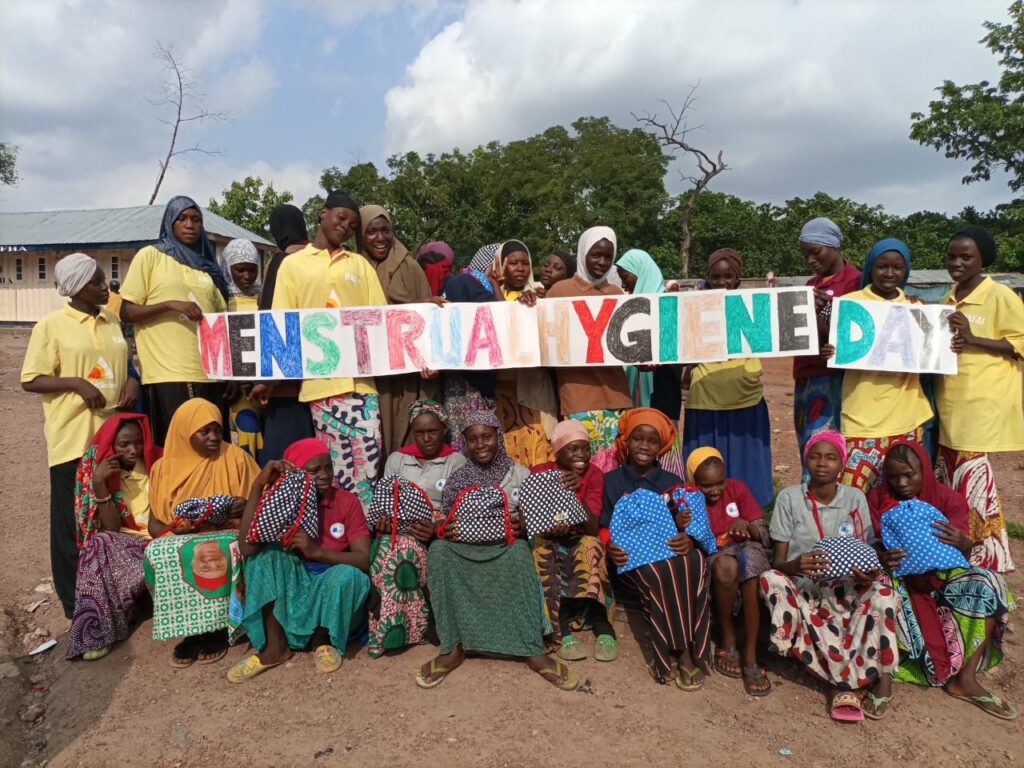
Menstrual stigma is a form of violence against girls. It’s time we create a world where every girl has the support and resources to manage her period with dignity — not shame.
I understand that the word violence carries weight. It implies perpetrators. It implies intent. Critics worry, not unreasonably, that broadening violence to encompass policy failures risks diluting it into meaninglessness.
That concern is understandable. It is also wrong.
Scholars of conflict and human rights have long distinguished between direct violence and structural violence. The concept, developed by Norwegian peace researcher Johan Galtung in the 1960s and refined by decades of subsequent scholarship, describes harm that is systemic, preventable, and distributed unequally along lines of race, class, and gender. It is violence committed not with fists, but with budgets and neglect.
By that definition, the deprivation of menstrual health support for girls around the world — and the devastating effect it has on their lives and futures — is a form of violence.
Begin with what happens to girls’ bodies. In the absence of sanitary products, girls improvise. Research from sub-Saharan Africa, South Asia, and parts of Latin America documents the use of rags, newspaper, dried leaves, sand, and strips of foam torn from mattresses. These materials are ineffective and frequently unsanitary. They cause infections, skin conditions, and in some cases more serious reproductive health complications. The suffering is physical, measurable, and entirely preventable with resources that cost, in many contexts, less than a dollar a month.
Then there is the harm of ignorance. In many communities, menstruation is so thoroughly encased in shame and silence that girls receive no preparation for it. Studies in sub-Saharan Africa and South Asia have consistently found girls who believed, upon first bleeding, that they were dying, that they had been harmed, or that they had done something wrong. The trauma of that first experience — unannounced, unexplained, often managed alone — is a psychological injury. And when the adults and institutions around a girl respond with secrecy and shame rather than information, that injury is not merely inflicted once. It is reinforced, monthly, for the better part of a decade.
Schools without functional, private, sanitary facilities for girls are not simply inconvenient. They are exclusionary by design. A girl who cannot change a pad or manage a heavy flow in private cannot fully participate in the institution. She is physically present and functionally unwelcome. The resulting humiliation — wearing soiled clothing, leaving class, or simply not coming at all — is not a side effect of underfunding. It is the predictable outcome of a deliberate failure to build what girls need.
“I understand that the word violence carries weight. It implies perpetrators. It implies intent. Critics worry, not unreasonably, that broadening violence to encompass policy failures risks diluting it into meaninglessness. That concern is understandable. It is also wrong.”
What distinguishes gender-based violence from other forms of harm is its targeting: it falls on people because of their sex. The deprivation of menstrual health support could not be more precisely targeted.
It affects only girls and women. It compounds in the precise communities where girls are already most devalued. And it operates in lockstep with the other mechanisms — child marriage, educational exclusion, economic marginalization — that sustain female subordination across generations. This is not a coincidence.
Structural violence is distinguished from other hardships by its capacity to reproduce itself. One harm opens the door to another, which opens the door to another still. Menstrual health deprivation is a case study in this logic.
A girl who misses school during her period falls behind her peers. Falling behind breeds disengagement. Disengagement leads to dropout. Dropout for adolescent girls in low- and middle-income communities is one of the strongest predictors of early marriage — itself a human rights violation with severe health, economic, and psychological consequences.
The girl who stayed home because there was no door on the toilet did not simply lose a day of school. She was placed on a trajectory that steadily narrows nearly every freedom available to her.
The psychological dimension compounds with equal efficiency. Girls who grow up managing their bodies in shame and secrecy internalize lessons about their place in the world that no classroom can easily undo. They are less likely to seek medical care when they need it, less likely to report abuse, less likely to believe that the institutions around them were built to serve them. Because, in material and measurable ways, many of them were not.
The strongest version of the argument does not rest on analogy or framing. It rests on law. Under international human rights frameworks, including the Convention on the Rights of the Child and the Convention on the Elimination of All Forms of Discrimination Against Women, states carry an obligation not merely to refrain from harming girls, but to actively protect them from harm — including harm arising from social and institutional structures.
“Girls who grow up managing their bodies in shame and secrecy internalize lessons about their place in the world that no classroom can easily undo. They are less likely to seek medical care when they need it, less likely to report abuse, less likely to believe that the institutions around them were built to serve them. Because, in material and measurable ways, many of them were not.”
A state that knowingly permits systematic harm to a specific group, when it has the capacity to prevent that harm, is in violation of its obligations under those frameworks. The argument that menstrual health deprivation is simply a consequence of poverty does not survive examination.
Many of the countries where the problem is most acute make substantial investments in public infrastructure, defense, and education — for boys. The question has never been only what a society can afford. It is what a society chooses to prioritize. Budgets are moral documents.
When governments and institutions consistently fail to provide what girls need, that pattern is not neglect in the ordinary sense. It is a policy. And policies that systematically harm a class of people on the basis of sex have, in the vocabulary of human rights, a precise name.
Last month, I traveled to Huanchaco, Peru, to meet directly with girls impacted by Global Catalyst programming. In my fifteen years of building this organization, I have made many such journeys. But what I witnessed in one classroom that week has not left me.
In a room not much different from any other — concrete walls, narrow desks, windows filled with thin Andean light — a group of girls between the ages of 11 and 14 stood in front of their peers and began to teach. They were members of GLOW Clubs, trained to become health advocates and educators within their own communities. Their audience was a co-ed class of classmates their own age.
What followed was one of the more remarkable things I have seen in years of working on gender and development issues.
These girls — young adolescents in a country where menstruation remains substantially taboo, in a community where the subject is rarely spoken aloud, let alone in mixed company — delivered a lesson in menstrual health without embarrassment, without hesitation, and without apology.
They explained the biology. They described the supplies available and how to use them. They spoke honestly about pain — the cramping, the fatigue, the days when getting out of bed, let alone concentrating in a classroom, requires a physical effort their male classmates would likely never be asked to make.
They were not just teaching facts. They were asking something harder of the boys in that room: to see their female classmates fully — to understand that a girl sitting quietly at her desk might be managing something invisible and difficult, and that her capacity to learn depends partly on whether he, her peer, chooses to understand or to mock.
And then they did something that no curriculum had instructed them to do, something that emerged, it seemed, from the particular courage of girls who have been given the rare gift of being taken seriously. They turned to the boys in the room and asked for empathy. Not pity. Not accommodation, exactly. Empathy: the willingness to extend imagination across the boundary of experience, to acknowledge a reality you do not share and will never inhabit.
The boys, to their credit, were quiet, at first, but then felt invited to ask questions, to gain understanding. Many were visibly absorbing something they had not considered before, then they were truly inquisitive in a way that felt like empathy.
In a country, and a world, where menstruation is most commonly met with silence, ridicule, or discomfort, a classroom full of adolescents sitting still and listening felt like an act of collective transformation in miniature.
I thought about Amara. I thought about every girl who has sat in a classroom unable to concentrate because of pain she cannot name to anyone, or who has missed this exact kind of lesson because her period kept her home. The girls standing at the front of that room in Huanchaco were doing the work that schools, governments, and health systems have consistently failed to do. They were doing it at age 12. They were doing it better.
What Global Catalyst has understood — and what that classroom made viscerally clear — is that the antidote to structural violence is not only policy. It is also the cultivation of young people who refuse to absorb the shame that the structure wants to hand them, and who turn instead to face their peers and say: This is what my body does. This is what I need. And I am asking you to understand.
That is not a small thing. In many contexts, it is an act of resistance.
There will be readers who find the word violence excessive — who feel that applying it to institutional failure devalues it, making it harder to identify and confront more acute forms of abuse. This is a serious objection, and it deserves a serious answer.
“Language shapes policy. When we call something a gap in provision, we respond with awareness campaigns and pilot programs. When we call it violence, we respond with urgency, accountability, and the full moral weight that girls’ suffering deserves. That is not inflation. That is precision.”
The answer is that the opposite is true. Naming menstrual health deprivation as a form of gender-based violence does not minimize the experiences of girls who are beaten, trafficked, or forced into marriage. It connects those experiences to their common source.
The girl who is kept home during her period and the girl who is forced into early marriage are not suffering from unrelated problems. They are being harmed by the same architecture of gender inequality, at different points along the same continuum.
Language shapes policy. When we call something a gap in provision, we respond with awareness campaigns and pilot programs. When we call it violence, we respond with urgency, accountability, and the full moral weight that girls’ suffering deserves. That is not inflation. That is precision.
Amara is still at home. She is waiting for her period to end so she can go back to school — a little further behind than she was before, a little more certain that the world outside her door was not designed with her in mind.
She is not wrong. But in Huanchaco, I met the girls who are trying to change their world from the inside. They’re not waiting for governments or donors or development frameworks to act. They’re standing up and demanding to be understood. At 11 and 12 and 13 years old, they are more clear-eyed about what is being done to them, and more willing to name it, than most of the institutions that are meant to serve them.
The harm being done to girls like Amara is not perpetrated by individuals or villains, but systems and institutions and choices that can be unmade.
Recognizing what those choices amount to is not a rhetorical exercise. It is the beginning of accountability. The girls in that classroom in Peru already know this. The question is whether the rest of us are willing to catch up — and call it by its name.
Kylie Schuyler is the Founder of Global Catalyst, an organization that has connected over 100,000 girls worldwide with life-changing mentorship and the courage to lead. She also serves as Board Chair of Every Woman, a global movement working to end violence against women and girls. At the center of this work is Kylie’s simple, lifelong belief: When girls and women are supported to rise, entire communities rise with them.