



7 Eye-Opening Period Poverty Statistics Everyone Should Know

May 28, 2026
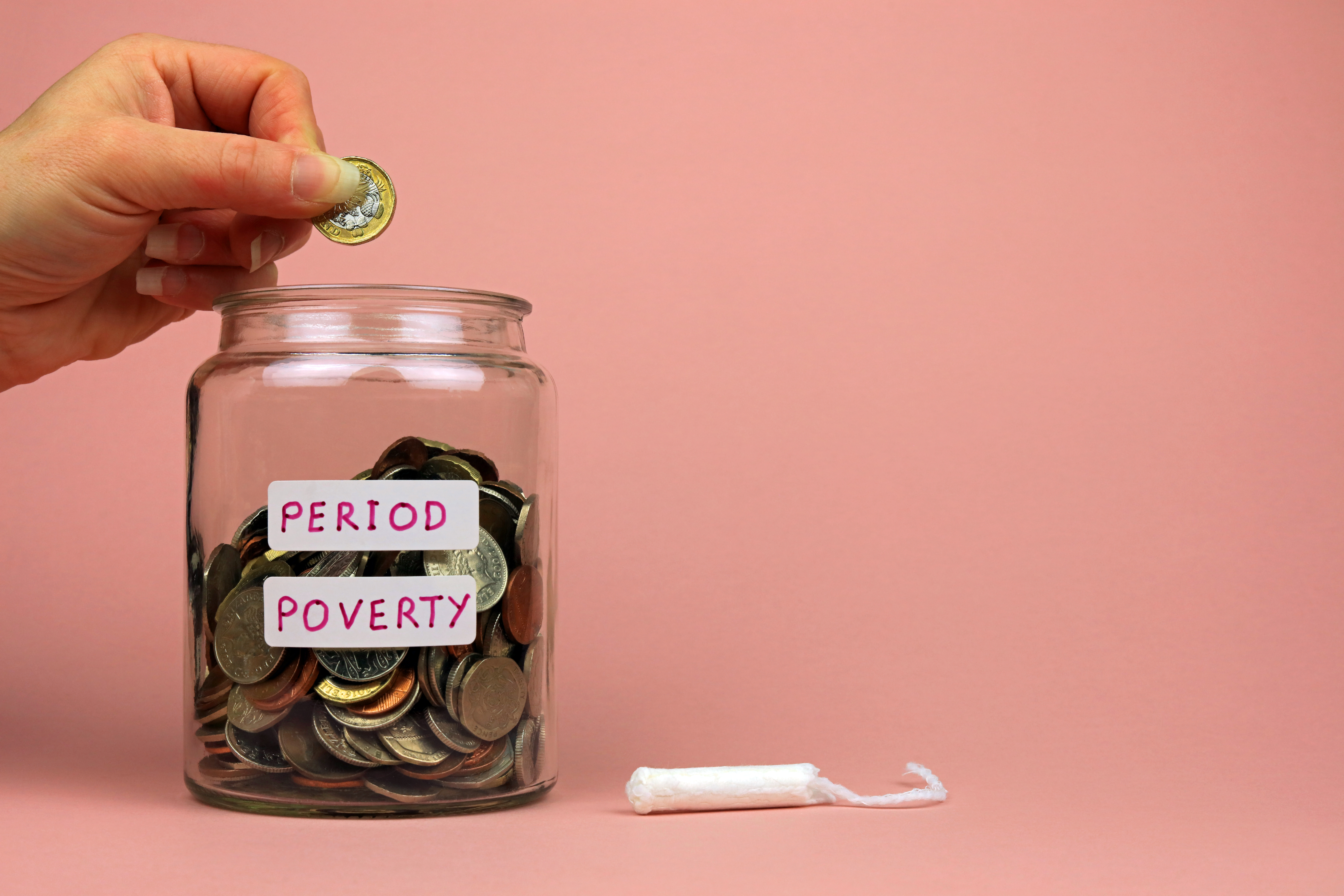
Period poverty — which is the lack of access to menstrual products, clean facilities, and proper menstrual health education — strips people of their dignity, disrupts their education, and deepens cycles of inequality.
In a time of converging crises, with rising costs of living, ongoing conflicts, political instability, and widening gender inequality, menstrual health and hygiene becomes even harder to achieve for most — especially vulnerable and under-resourced populations.
With global inflation driving up the price of essential goods, and school systems still failing to provide adequate facilities and education for girls, period poverty is becoming a public health emergency.
At Global Girls Glow, we believe every girl deserves access to the resources she needs to protect her health, stay in school, have the freedom to make her own decisions, and thrive with dignity. Because no girl should have to choose between her health and her future.
Period poverty is solvable within our lifetime. And understanding the true scale of the problem is the first step towards lasting change.
If you want to join the movement to end period poverty today, here are 7 crucial statistics you need to know:
-
500 million people worldwide experience period poverty.
1 in 4 teens and 1 in 3 adults who menstruate — roughly 500 million individuals — lack adequate access to menstrual products, clean sanitation facilities, or proper education about menstrual health. This staggering number cuts across continents and income levels, proving that period poverty is not just a problem of the developing world.
-
Only 39% of schools worldwide provide menstrual health education.
A landmark 2024 UNICEF and WHO report found that fewer than 2 in 5 schools globally offer any menstrual health education at all. Without accurate information about their bodies, girls face shame, confusion, and health risks, and are far more likely to miss school when their period arrives.
-
In New Delhi, 40% of girls have missed school due to their period.
A 2018 study published in the Journal of Family and Community Medicine confirmed that 40% of 600 adolescent girls surveyed in Delhi government schools missed school during their menstrual cycle. The research indicates that the high rate of absenteeism is caused by a lack of privacy at school, restrictions imposed on girls during menstruation, and a lack of information on menstruation. Nearly 65% of girls reported that it affected their daily activities at school, and that they had to miss their exams and classes as a result of pain, shame, and anxiety about leakage and staining of their school uniforms.
-
In the U.S., 11.9 million people struggle to access menstrual products.
Period poverty is a problem everywhere — not just in low-and middle-income countries. In the United States alone, approximately 11.9 million to 16.9 million people lack consistent access to period products. That includes 25% of adolescents who report difficulty obtaining the products they need to manage their periods with dignity.
-
64% of low-income American women couldn’t afford period products in a single year.
A groundbreaking study conducted among low-income women in St. Louis found that nearly two-thirds reported being unable to afford menstrual products at least once in the previous 12 months. For many, this means improvising with toilet paper, cloth, or other ineffective and unsafe alternatives. 21% of these women faced these challenges every single month.
-
Black and Latino students are disproportionately impacted in the U.S.
Period poverty does not affect all communities equally. In 2021, 23% of Black respondents and 24% of Latino respondents struggled to afford period products, compared to just 8% of white respondents. Nearly half of Black and Latino students reported difficulty focusing in school due to a lack of access, compared to 28% of white students.
-
Over 690,000 women and girls in Gaza lack basic menstrual hygiene support.
Menstruation does not stop during conflict. A recent UN Women report found that over 690,000 women and girls of reproductive age in Gaza lack access to the hygiene items needed to manage their periods with safety and dignity. In crisis zones worldwide, menstrual health is routinely deprioritized, putting women and girls at serious health risk.
A World Without Period Poverty is Possible
Providing the space, tools, and education for girls to tackle period poverty is central to our work. When a girl receives the support, tools, and education to make her own decisions, she can change not only her own life, but her entire community.
Ending period poverty goes far beyond providing pads or rewriting policies. It is a fundamental statement to girls and women everywhere that we value their health, their education, and their futures. When we listen to girls, they tell us exactly what they need to succeed: dignity, access, and equity.
A period should never be a reason a girl does not reach her full potential. When we stand in a girl’s corner and treat her basic needs as essential, we create a world where she can finally dream — and lead — without limits.
Interested in diving deeper? Check out our article, How Many States Have a Period Tax? The Hidden Cost of Menstrual Products in the U.S.
Global Girls Glow mentors girls around the world to become powerful advocates and confident leaders. Through our signature program, GLOW Club, we create safe, supportive spaces for girls in some of the world’s most underserved areas to connect with trusted mentors, develop the confidence to lead, and begin dreaming without limits. Since our founding, we’ve ignited the power of more than 100,000 girls — and we’re just getting started.