



Deprioritization Has a Cost — and Girls Are Paying It First

July 22, 2026
By Riya Thakur, Global Advocacy Manager
Wars don’t just kill people. They defund girls’ futures. And right now, that future, for millions of women and girls, is at risk.
I have spent fourteen years working at the intersection of girls’ rights, reproductive health, gender equality, and global advocacy. I have sat in negotiating rooms at the Commission on Population and Development and the Commission on the Status of Women, watching carefully worded commitments get weakened line-by-line.
I have worked alongside civil society partners across South Asia and the wider Global South who are doing extraordinary last-mile work with limited resources. And I have helped design programs under constraints that show just how fragile progress can be when financing and political will do not align.
So when I say the current moment feels different, I mean it.
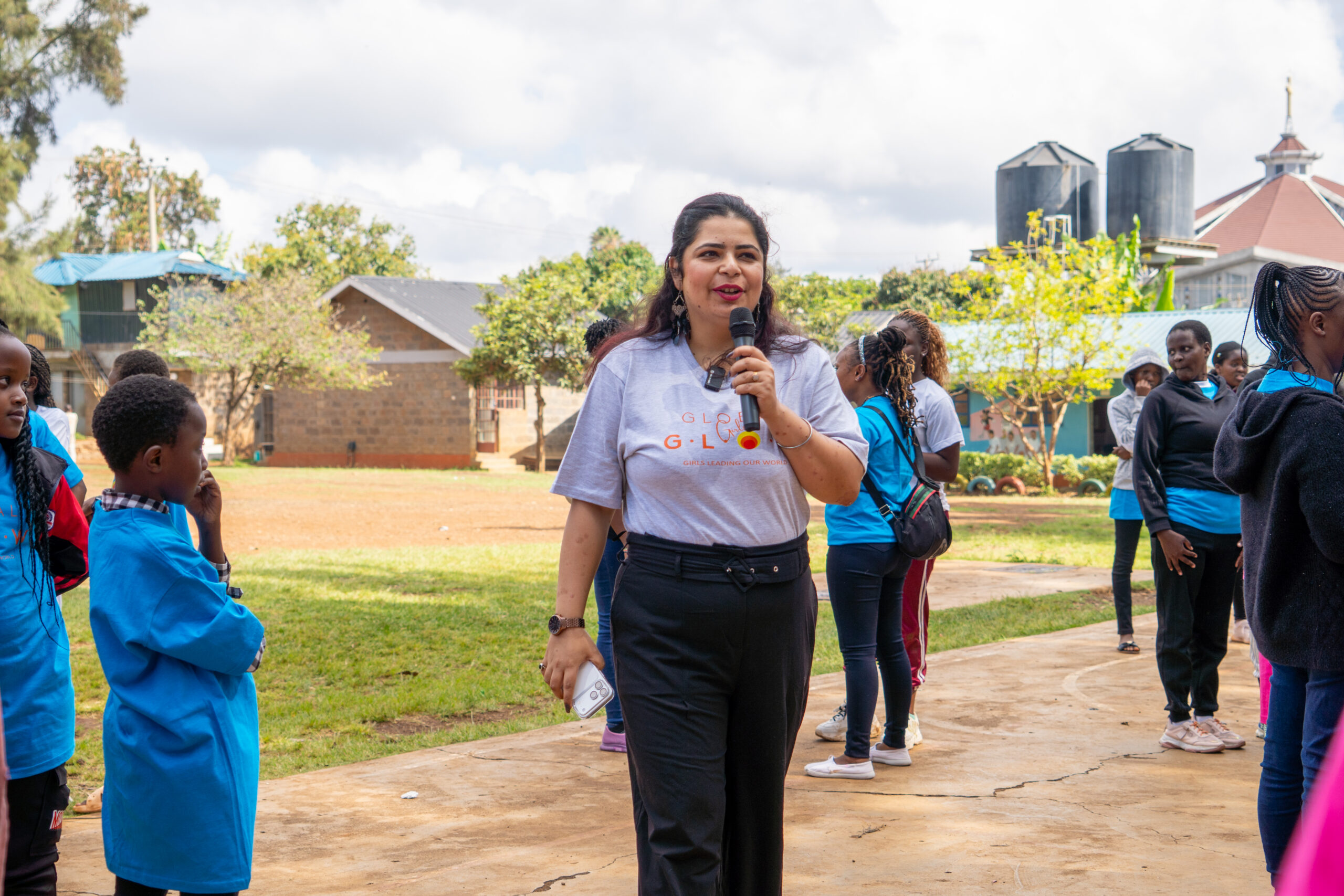
Riya Thakur, our Global Advocacy Manager, facilitating an activity at a recent girl-led summit in Nairobi, Kenya.
Because the scale of recent unprecedented global funding cuts is absolutely devastating for girls whose lives are already shaped by uncertainty.
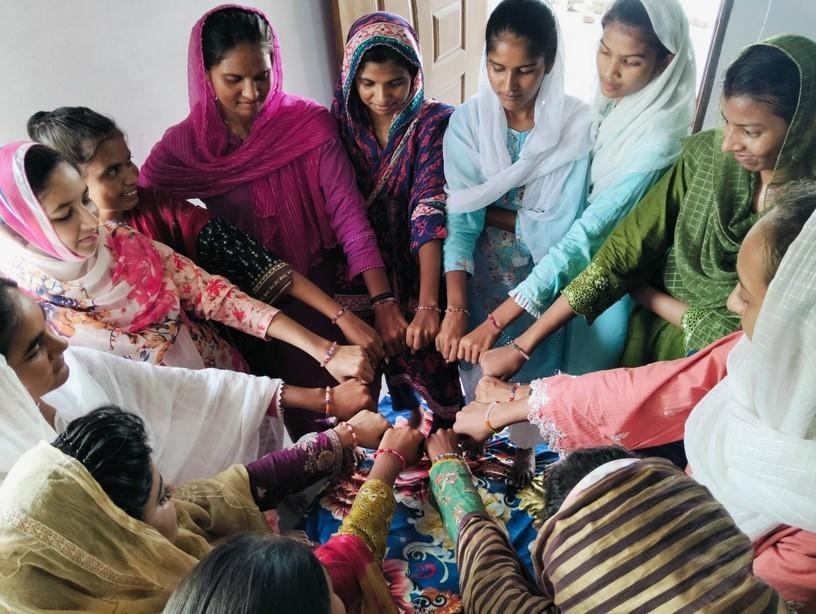
In my work as Global Advocacy Manager at Global Catalyst, I often meet girls who are navigating challenges many policymakers never see firsthand — whether that is barriers to staying in school, difficulty accessing information about their health, not feeling safe in public spaces, or simply not having their voices taken seriously.
Progress in these areas is rarely linear, and when support systems weaken, girls are often the first to feel the consequences.
A funding crisis, and a political one
We are living through overlapping wars, economic uncertainty, rising debt pressures, and a retreat from development commitments made when stability felt more possible. Global health and gender equality institutions are being asked to respond to expanding crises with shrinking resources. UNFPA has warned that funding cuts are forcing health facilities and mobile teams to close or operate on the brink. WHO, UN Women, and the wider multilateral system are facing similar pressures at a time when the needs of women and girls are growing.
This is not only a funding problem. It is a political problem.
History is clear: When women’s health loses funding during crises, maternal mortality rises. Girls leave school. Child marriage increases. Gender-based violence becomes less visible — not because it stops, but because fewer people are funded to prevent it, document it, and respond to it.
We have seen this pattern before.
By 2008, support for population and reproductive health programs had fallen from around 30% of global health aid in 1994 to about 12%. Post-conflict reconstruction has too often treated women’s rights as secondary to “stability” in Afghanistan, Iraq, South Sudan, and beyond.
Structural adjustment policies in the 1980s and 1990s did not shrink governments equally: They often weakened the ministries and public services that women and girls depended on most.
I have watched versions of this pattern play out across regions. In South Asia, Africa, Latin America, and other parts of the Global South, funding volatility does not just disrupt programs. It undermines confidence in the very systems communities have been encouraged to rely on.
Communities that had begun to trust these systems are reminded how vulnerable progress can be when support is dependent on shifting political and funding priorities. That is the cost we rarely put in budget lines: not only interrupted services, but interrupted trust.
And that is precisely why I believe organizations like Global Girls Glow matter in this moment. If funding cycles and political priorities can change overnight, girls need more than programs. They need lasting skills, confidence, networks, and opportunities to influence the decisions that affect their lives.
Girls must be recognized as leaders and experts
Girls cannot be treated only as beneficiaries waiting at the end of a fragile development pipeline. They must be supported as advocates, leaders, and experts in their own lives.
Through community-based mentorship, safe spaces, social and emotional learning, girl-led advocacy initiatives, and engagement in global policy spaces, Global Catalyst helps girls build agency, voice, and power.
Our work is rooted in a simple truth: Girls know what girls need. The responsibility of institutions is to listen, invest, and create pathways for girls’ priorities to shape the decisions that affect their lives.
This is global-local advocacy in practice: connecting girls and their experiences with the decisions being made in national, regional, and international spaces. The lived realities of girls must shape global commitments, and those commitments must translate back into local budgets, services, protection systems, and opportunities.
“Girls cannot be treated only as beneficiaries waiting at the end of a fragile development pipeline. They must be supported as advocates, leaders, and experts in their own lives.”
At Global Catalyst, I have the privilege of working alongside girls who are driving real change in their communities while also engaging with broader policy conversations. My role is not to speak for girls, but to help create opportunities for their voices, experiences, and recommendations to be heard by those with the power to act.
Because girls are not waiting to lead. They are leading. Our responsibility is to listen, invest, and ensure their priorities shape the decisions that affect their lives.
Here are my recommendations for how we can make that happen:
- Southern-led financing must move from pilot to permanent. We cannot keep waiting for Geneva, New York, or Washington to decide what girls in the Global South need.
- Domestic resource mobilization must become central to gender justice. Governments should be held accountable not only for creating gender budget lines, but for protecting and actually spending them.
- Civil society organizations doing last-mile delivery need bridge financing now, before donor funding cycles reset. The organizations closest to communities most at risk are too often the ones being asked to wait the longest.
- Girl-led advocacy must be funded as essential work, not treated as consultation, storytelling, or a side event.
- Philanthropic capital must become more flexible, timely, and responsive. The moment is not in 10 years. It is now.
The arguments for urgent action are not new. They have been made year after year in global policy spaces. What is missing is not analysis. What is missing is urgency that translates into funding released, agreements signed, and budget lines protected.
The development sector has a choice: Act now, or watch decades of progress reverse in years.
Throughout my career, I have seen what becomes possible when girls are trusted, invested in, and have the opportunity to lead. But I have also seen how quickly progress can stall when commitments are not matched by resources.
The question is not whether we can afford to fund gender equity in a moment of economic uncertainty. The question is whether we can afford what happens if we don’t.
Global Catalyst mentors girls around the world to become powerful advocates and confident leaders. Our signature program, GLOW Club, connects girls in some of the world’s most underserved areas with trusted local mentors and a safe space to express themselves as they develop their agency, find their voice, and build their power. Since our founding, we’ve ignited the power of more than 100,000 girls, sparking a growing movement of youth-led change that is transforming communities — and the world — for the better.